Air compressor molecular sieve replacement process
Time:2025-12-10
Abstract: Compressed air is the "lifeblood" of modern industry, but its moisture content is the culprit behind many production problems. As a key equipment for providing deep drying air, the performance status of the core molecular sieve of the adsorption dryer directly determines the air quality. This article will delve into the timing of molecular sieve replacement, standard operating procedures, and best practices to help ensure the stability and efficiency of compressed air systems.
1、Why are molecular sieves so important?
In adsorption dryers (especially non heat/micro heat regeneration types), molecular sieve is an artificially synthesized adsorbent with a uniform microporous structure. It is like a precision "molecular sieve" that can selectively adsorb water molecules in compressed air, allowing nitrogen, oxygen, and other gases to pass through, thereby stabilizing the pressure dew point of compressed air to -20 ℃ to -70 ℃ or even lower, meeting the applications of high demand industries such as precision manufacturing, electronics, food and medicine.
2、When is it necessary to replace the molecular sieve?
The adsorption capacity of molecular sieves will gradually saturate and decay over time. Timely replacement is the key to ensuring production quality and equipment lifespan. When the following signs appear, should consider checking or replacing the molecular sieve:
1). Continuous increase in dew point pressure (core indicator)
Performance: The pressure dew point meter reading at the outlet of the dryer remains consistently high or cannot reach the set value (e.g., always above -20 ℃).
Impact: Liquid water appears in downstream pipelines and equipment, leading to rusting of pneumatic tools, defects in sprayed products, and malfunction of instruments and meters.
2). Poor or abnormal regeneration exhaust
Performance: The dryer carries a large amount of powdery molecular sieve particles in the exhaust gas discharged during the regeneration stage, or there is almost no exhaust during regeneration.
Reason: Due to oil pollution poisoning and pulverization, the flowability of molecular sieves deteriorates, causing blockages in exhaust pipes or mufflers.
3). The pressure difference in the adsorption tower has significantly increased
Performance: The system control panel shows that the pressure difference reading of the adsorption tower far exceeds the design value.
Reason: After molecular sieve pulverization, small particles will block the bottom filter and airflow channels, increasing system resistance and leading to an increase in energy consumption.
4). Achieve the preset running time or cycle
Suggestion: Under normal operating conditions (intake temperature ≤ 40 ℃, oil content ≤ 0.1ppm), the normal service life of high-quality molecular sieves is usually 2-3 years. If your device has been running continuously for more than this period, even if no obvious problems have occurred, it is recommended to conduct preventive inspections and replacements.
5). Molecular sieves was severe by oil pollution
Reason: Failure of the pre filter or oil leakage from the air compressor, causing lubricating oil to enter the dryer. Oil molecules can clog the micropores of molecular sieves, causing them to permanently deactivate.
Judgment: When replacing, if the color of the old molecular sieve becomes darker and has a sticky feeling, it can be judged as oil pollution.
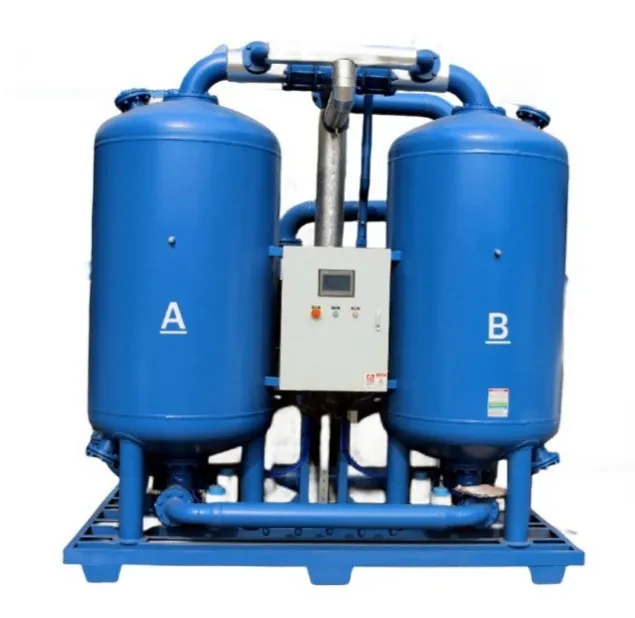
3、Molecular sieve standard replacement process
Replacing molecular sieves is a highly specialized task, and it is recommended that the preliminary preparation, disassembly, and cleaning work be carried out by professional service personnel. The process for filling new molecular sieve standards is as follows:
1). Fill with new molecular sieve:
Slowly and evenly pour the new molecular sieve into the adsorption tower through a dedicated funnel or hose. During the filling process, it is advisable to avoid tipping from a height to prevent the molecular sieve from breaking due to impact. When conditions permit, "vibration filling" can be adopted to ensure tight filling and reduce powdering and fluidized wear during subsequent use. Fill to the specified height or weight.
2). Closed adsorption tower: Carefully clean the sealing surface of the tower mouth, install new seals, and then tighten the tower cover bolts according to the manufacturer's specified torque and sequence (diagonal) to ensure a tight seal.
4、Professional advice and best practices
* Ensuring the efficient operation of the pre-filtration system (precision filters and activated carbon) is the most cost-effective way to extend the lifespan of molecular sieves.
* Choose high-quality consumables: Use original or certified high-quality molecular sieves, which perform better in adsorption capacity, compressive strength, and pollution resistance, and have lower overall usage costs.
* Systematic thinking: When replacing the molecular sieve, it is recommended to inspect and replace the pre filter element at the same time, and conduct a comprehensive physical examination of the dryer control system.
The molecular sieve of the air compressor adsorption dryer is its "heart". A scientific and standardized molecular sieve replacement process is not only a necessary means to restore equipment performance, but also a key investment to ensure stable production processes, improve final product quality, and reduce overall operating costs.
If you are facing the problem of unstable dew point of compressed air, as a professional provider of compressed air purification solutions, OIM Chemical not only supplies high-quality molecular sieves from globally renowned brands, but also provides professional on-site replacement and system debugging services. Our engineering team has extensive experience to ensure that every service meets the highest standards.
Abstract: Compressed air is the "lifeblood" of modern industry, but its moisture content is the culprit behind many production problems. As a key equipment for providing deep drying air, the performance status of the core molecular sieve of the adsorption dryer directly determines the air quality. This article will delve into the timing of molecular sieve replacement, standard operating procedures, and best practices to help ensure the stability and efficiency of compressed air systems.
1、Why are molecular sieves so important?
In adsorption dryers (especially non heat/micro heat regeneration types), molecular sieve is an artificially synthesized adsorbent with a uniform microporous structure. It is like a precision "molecular sieve" that can selectively adsorb water molecules in compressed air, allowing nitrogen, oxygen, and other gases to pass through, thereby stabilizing the pressure dew point of compressed air to -20 ℃ to -70 ℃ or even lower, meeting the applications of high demand industries such as precision manufacturing, electronics, food and medicine.
2、When is it necessary to replace the molecular sieve?
The adsorption capacity of molecular sieves will gradually saturate and decay over time. Timely replacement is the key to ensuring production quality and equipment lifespan. When the following signs appear, should consider checking or replacing the molecular sieve:
1). Continuous increase in dew point pressure (core indicator)
Performance: The pressure dew point meter reading at the outlet of the dryer remains consistently high or cannot reach the set value (e.g., always above -20 ℃).
Impact: Liquid water appears in downstream pipelines and equipment, leading to rusting of pneumatic tools, defects in sprayed products, and malfunction of instruments and meters.
2). Poor or abnormal regeneration exhaust
Performance: The dryer carries a large amount of powdery molecular sieve particles in the exhaust gas discharged during the regeneration stage, or there is almost no exhaust during regeneration.
Reason: Due to oil pollution poisoning and pulverization, the flowability of molecular sieves deteriorates, causing blockages in exhaust pipes or mufflers.
3). The pressure difference in the adsorption tower has significantly increased
Performance: The system control panel shows that the pressure difference reading of the adsorption tower far exceeds the design value.
Reason: After molecular sieve pulverization, small particles will block the bottom filter and airflow channels, increasing system resistance and leading to an increase in energy consumption.
4). Achieve the preset running time or cycle
Suggestion: Under normal operating conditions (intake temperature ≤ 40 ℃, oil content ≤ 0.1ppm), the normal service life of high-quality molecular sieves is usually 2-3 years. If your device has been running continuously for more than this period, even if no obvious problems have occurred, it is recommended to conduct preventive inspections and replacements.
5). Molecular sieves was severe by oil pollution
Reason: Failure of the pre filter or oil leakage from the air compressor, causing lubricating oil to enter the dryer. Oil molecules can clog the micropores of molecular sieves, causing them to permanently deactivate.
Judgment: When replacing, if the color of the old molecular sieve becomes darker and has a sticky feeling, it can be judged as oil pollution.
3、Molecular sieve standard replacement process
Replacing molecular sieves is a highly specialized task, and it is recommended that the preliminary preparation, disassembly, and cleaning work be carried out by professional service personnel. The process for filling new molecular sieve standards is as follows:
1). Fill with new molecular sieve:
Slowly and evenly pour the new molecular sieve into the adsorption tower through a dedicated funnel or hose. During the filling process, it is advisable to avoid tipping from a height to prevent the molecular sieve from breaking due to impact. When conditions permit, "vibration filling" can be adopted to ensure tight filling and reduce powdering and fluidized wear during subsequent use. Fill to the specified height or weight.
2). Closed adsorption tower: Carefully clean the sealing surface of the tower mouth, install new seals, and then tighten the tower cover bolts according to the manufacturer's specified torque and sequence (diagonal) to ensure a tight seal.
4、Professional advice and best practices
* Ensuring the efficient operation of the pre-filtration system (precision filters and activated carbon) is the most cost-effective way to extend the lifespan of molecular sieves.
* Choose high-quality consumables: Use original or certified high-quality molecular sieves, which perform better in adsorption capacity, compressive strength, and pollution resistance, and have lower overall usage costs.
* Systematic thinking: When replacing the molecular sieve, it is recommended to inspect and replace the pre filter element at the same time, and conduct a comprehensive physical examination of the dryer control system.
The molecular sieve of the air compressor adsorption dryer is its "heart". A scientific and standardized molecular sieve replacement process is not only a necessary means to restore equipment performance, but also a key investment to ensure stable production processes, improve final product quality, and reduce overall operating costs.
If you are facing the problem of unstable dew point of compressed air, as a professional provider of compressed air purification solutions, OIM Chemical not only supplies high-quality molecular sieves from globally renowned brands, but also provides professional on-site replacement and system debugging services. Our engineering team has extensive experience to ensure that every service meets the highest standards.
